GymRobot is a pocket-sized fitness coach that builds a multi-day workout program from your goals, experience level, available equipment, and schedule — not a generic template. Users photograph their home or hotel setup and the app detects what they have, prescribes only usable exercises, and adapts as they log sets, reps, and load. It also includes phased physical therapy rehab programs with mid-phase check-ins, a travel mode for bodyweight workouts, offline support, and a custom builder with a searchable exercise library. Every account starts with a 14-day Premium trial, no credit card required.
Begin with the person and the goal
GymRobot introduces workout planning through three inputs that matter in practice: the user's goal, the equipment available, and the time they can train. The public experience explains that sequence before asking someone to start.
The three-step explanation moves from choosing a goal to selecting equipment, then training and logging. Each step has one clear job, keeping the first impression focused.
A practical starting point1 / 2
Three clear steps. The real public-site cards explain goal selection, equipment, and training in sequence.
Three clear steps. The real public-site cards explain goal selection, equipment, and training in sequence.
Equipment comes first. The equipment feature explains how a home or hotel setup informs the plan.
Make adaptation part of the product story
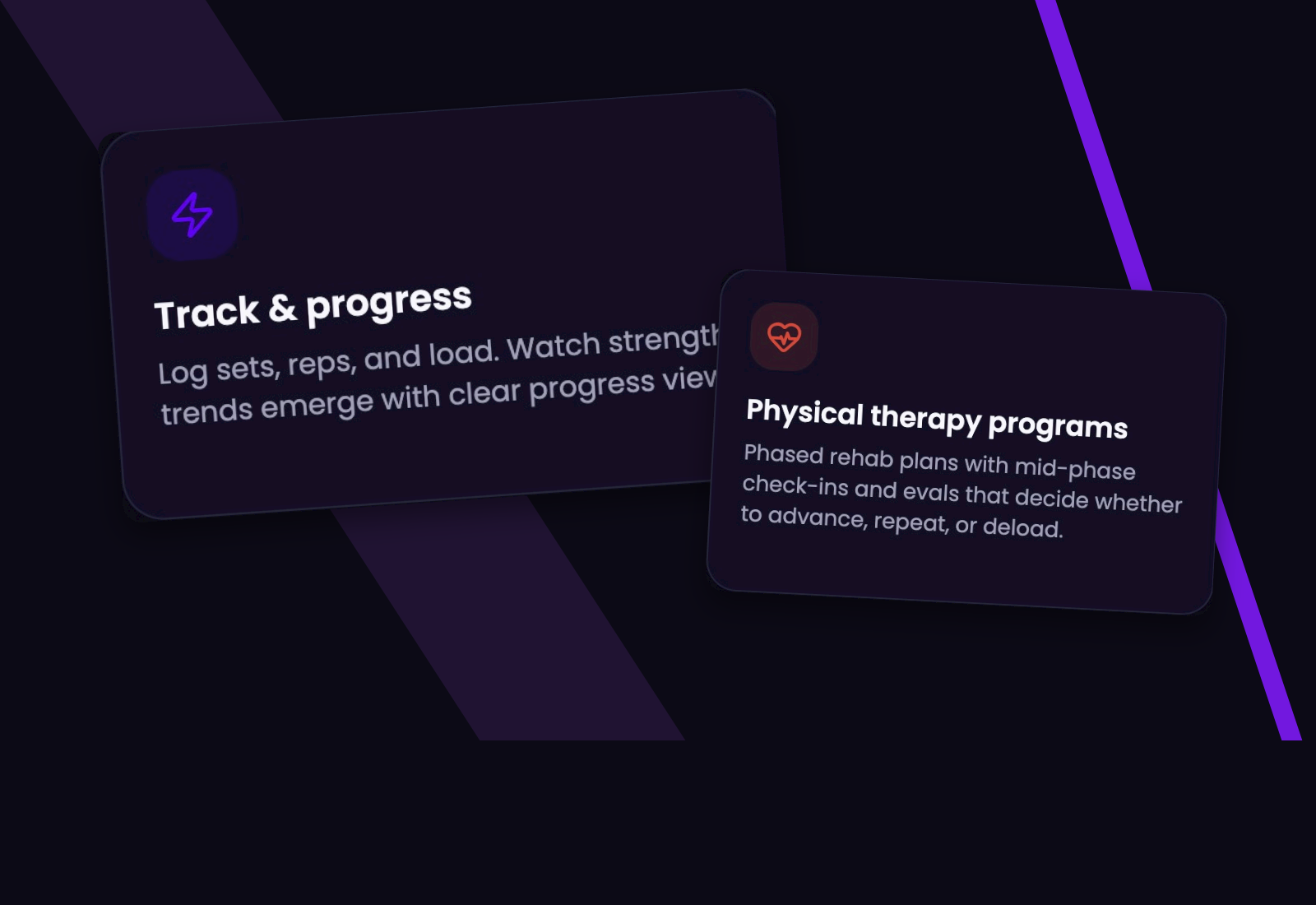
The public feature set distinguishes regular training from phased rehabilitation programs. It also gives logging and progress their own place in the experience, so the plan is presented as something that can change over time.
The interface explanation keeps these ideas in separate, short cards. Users can understand the available modes without having to read a long technical description first.
Two distinct parts of the product, retaining their original interface copy.
Leave room for a different routine
Travel mode and a custom builder address different reasons a routine may need to change. The public site explains a bodyweight option for the road and a separate path for people who want to build their own workouts.
The responsive landing page keeps the same introduction, primary action, and feature hierarchy on smaller screens. Its visual language stays recognisable through the violet and magenta accents.
Flexibility and access1 / 2
Travel or build your own. The original Travel mode and Custom builder cards explain two different ways to adapt.
Travel or build your own. The original Travel mode and Custom builder cards explain two different ways to adapt.
The mobile introduction. Real public mobile captures retain the product headline, action, and feature explanations.